Arena Trophy Co · buyer guide
Planning a trophy lift and stage display
For a worldwide Arena Trophy Co trophy presentation, plan the lift around the actual finished object, stage arrangement and people involved. A design concept does not establish grip, support or handling. Give the producer a clear sequence and obtain the relevant construction and venue review before rehearsing the final movement or promising a lift.
Reviewed 2026-09-05 · AI-assisted editorial review. General buying guidance; illustrative scenarios are not customer case studies. Images are AI-generated concepts.
What actions belong in the trophy presentation sequence?
Write the intended presentation as a short series of actions: the host introduces the team, an authorized handler presents the trophy, the captain accepts it, the team gathers and the camera takes the agreed view. Identify where the trophy starts and where it returns after the photograph. Each transition needs a practical owner.
Avoid a vague instruction such as make the trophy lift epic. It does not tell the designer which surfaces will be held or tell the producer how the object moves through the stage. A specific sequence makes it possible to ask whether the proposed construction and dimensions suit the intended action before the event depends on them.

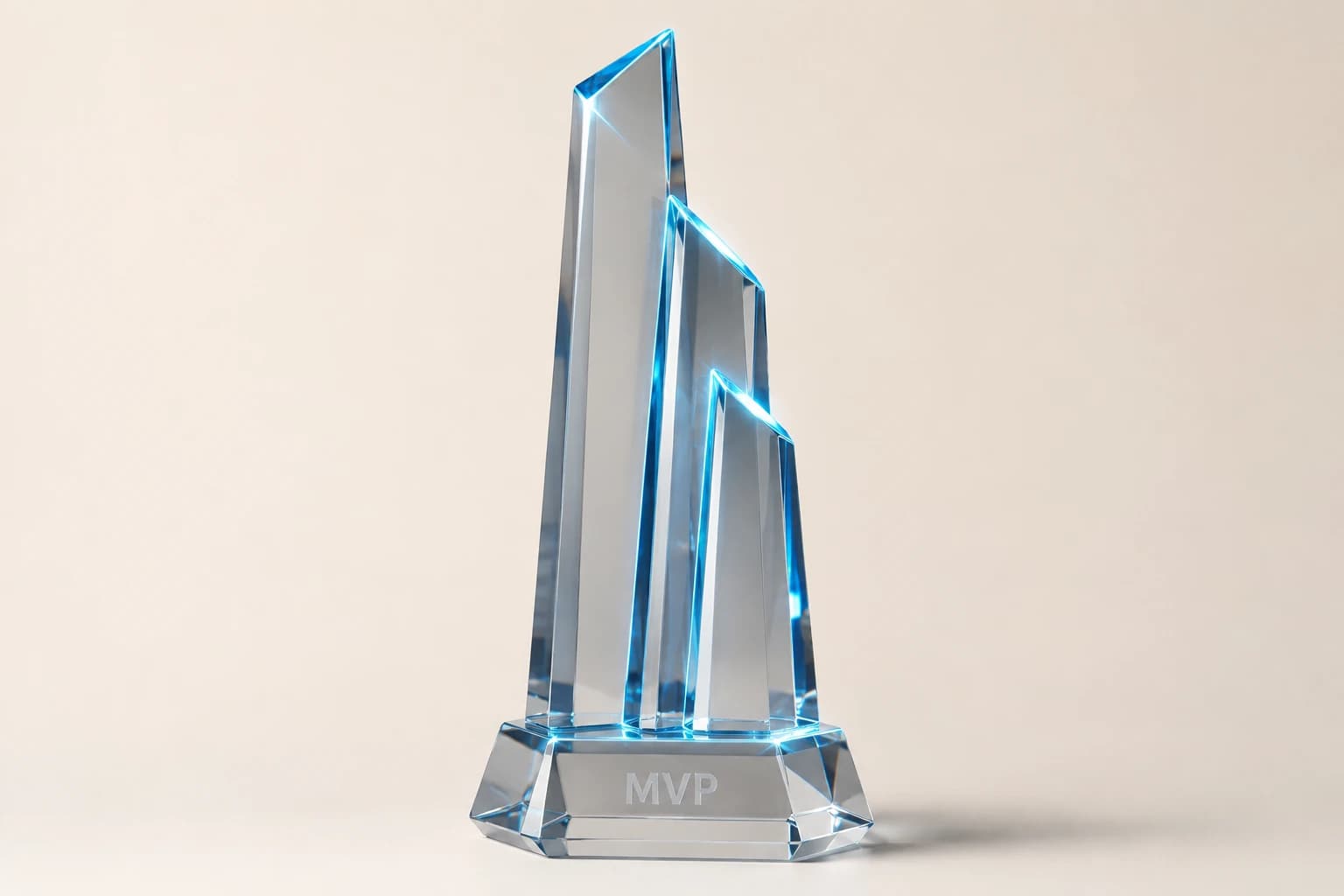
Which parts of the finished trophy can be handled?
Ask the production contact which parts are intended to support handling and whether any decorative elements should be avoided. A handle-like shape or sculpted projection is not automatically a carrying point. The proposed grip and movement should be reviewed against the complete finished object, not inferred from a rendering.
Share those instructions with the person managing the stage handoff. If the trophy has multiple components, confirm whether they remain assembled during the presentation and how the assembly is checked. Do not improvise a new lift because the decorative top looks easier to reach than the intended support. Change the choreography if the approved handling method does not fit the original visual idea.
How should the pedestal and stage space be checked?
Provide the proposed display footprint, height and surrounding clearance to the event producer. Ask the venue or stage team to confirm the actual support arrangement for the object. A pedestal that looks appropriate in a concept image may have different usable dimensions or restrictions from the unit available at the venue.
Keep access routes and nearby equipment in the conversation. The trophy should have a defined placement that does not require a handler to weave through cables or move unrelated stage items at the last moment. The award brief is not a structural certification; the relevant production and venue contacts must approve the actual setup and any applicable handling requirements.

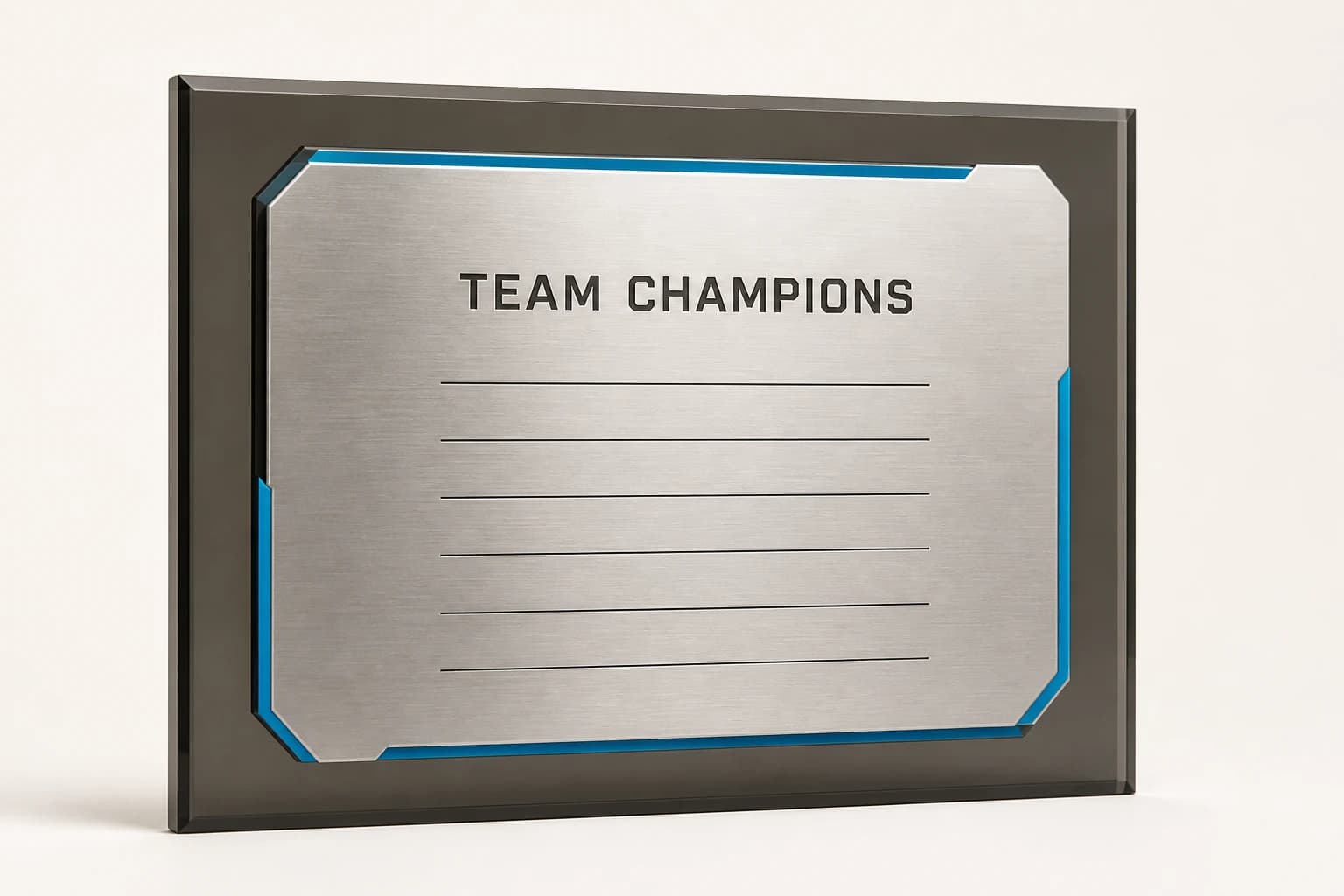
Which trophy details must read from the intended cameras?
Show the proposed trophy position and team arrangement to the broadcast or photography contact. The event name and overall silhouette may matter more in a wide shot than small personalized text. Ask which details need to read in the actual framing instead of assuming all engraving will be visible from every camera.
A close-up and a team-wide image can serve different purposes. The producer may schedule both rather than making one compromised arrangement do everything. Keep faces, the main award identity and sponsor treatments considered together. A product mockup is useful for discussion, but the actual lighting and camera rehearsal should resolve how the finished object appears in the venue.
Fabit discusses stage lighting and camera angles in trophy design.
Sources: Fabit: Custom esports trophies
How should lighting and finish be reviewed together?
If the proposed design uses a finish that may respond strongly to the stage lighting, ask for a review under conditions relevant to the event. Do not promise a material will be glare-free, camera-ready or readable based only on its generic name. The finish, lighting angle, background and camera exposure all belong in the practical review.
The design team may propose a different surface treatment or inscription placement after seeing the intended view. Treat that as a design revision requiring the appropriate approval. A change made to improve the broadcast should not silently remove the approved event name or distort a sponsor mark. Review the final visual and the underlying text together.

Use the article’s example files
Sample rows are fictional planning examples. Replace them with authorized information and retain the approval references privately; this file is not a production release.
When should player keepers be handed out around the lift?
If personal awards are part of the event, decide whether players receive them before or after the shared trophy action. Holding separate objects can affect where hands are available and how the team gathers. The producer can choose a sequence that lets each part of the recognition happen clearly.
Keep the personal pieces ready for their own handoff instead of balancing them around the main pedestal as an unplanned display. If the organizer wants that arrangement, include it in the stage plan and have the relevant team review the actual space. A decorative lineup in a photograph should not become a last-minute operational requirement without checking the physical setup.
What does a rehearsal with a substitute object establish?
The people involved need the final handling instructions and the intended sequence. If a substitute object is used during an early rehearsal, state what that rehearsal establishes and what it does not. It can test timing and positions, but it does not verify the finished trophy's weight, grip or assembly.
Before the live presentation, use the appropriate actual-object review to confirm the remaining handling questions. If the approved object differs from the rehearsal stand-in, revisit the affected action. The producer should know who can stop or change the lift if a condition is unresolved. A shorter, controlled presentation is preferable to improvising around an object nobody has checked.
Who takes custody after the trophy leaves the stage?
After the camera moment, someone must accept responsibility for the trophy. Identify whether it returns to a display area, goes backstage with team operations or enters packing for transport. A stage manager should not have to guess which person is authorized to take the championship object away.
Keep the final owner and receiving contact in the event's operational record. The captain may hold the trophy on stage while the organization owns it afterward. That distinction also affects onward shipping and storage. Plan the handoff before the ceremony so an attractive presentation does not end with an unclaimed object beside the stage or an unplanned trip in a player's luggage.
What if the final handling review does not support a lift?
If the final handling review does not support the intended lift, choose an alternative that preserves the championship moment. The team can gather around an approved display position or use another reviewed handoff. Do not treat lifting as mandatory merely because the initial creative brief included it.
The alternative should be discussed with the producer before the live cue, including the camera view and any announcement changes. Keep the trophy's actual construction and the people involved central to the decision. A concept image cannot override a practical handling concern. The event can still recognize the winner clearly while using the object in the way the responsible contacts have approved.
What should be inspected after the presentation?
Check the trophy after the presentation and before packing or final handoff. Confirm that the complete object and any approved components are present and in the expected condition. A successful camera shot does not establish that nothing shifted or needs attention during the next movement.
Retain the handling and packing instructions with the operations contact responsible for onward transport. If the trophy will appear at another event, record any relevant changes to its setup rather than assuming the first venue's arrangement transfers unchanged. Each later use should consider its own display support, lighting and handoff conditions while preserving the approved identity and historical result on the object.
Illustrative example: how do seven purchased objects differ from one stage action?
A fictional final uses one shared stage trophy and six personal keepers. The purchase count is 6 × 1 + 1 = 7 objects, with no spares. The calculator checks that inventory only; it does not approve the lift, pedestal or handling method.
The producer plans to keep all six personal pieces backstage until after the central photograph. One authorized handler brings the trophy to its reviewed stage position, and team operations receives it after the camera cue. The worksheet assigns those actions without inventing weights, dimensions or safe carrying limits.
If the final handling review changes the plan to a stationary team photograph, the object count remains seven. The choreography changes, not the approved recognition inventory. The event should update its action sequence and camera brief while preserving the exact personal keeper allocation.
Optional calculation: Count stage and player objects in the presentation inventory
Which presentation approach fits the confirmed trophy handling?
Compare a reviewed lift, a controlled handoff and a team photograph around an approved display position by the actions the finished object can support. Each can mark the championship clearly. The producer should choose the presentation after reviewing construction, support and camera needs rather than treating an early creative sketch as a handling specification.
| Option | Useful when | Decision to resolve |
|---|---|---|
| Stationary display photograph | The approved setup presents the trophy clearly without a lift. | Support, placement, camera view and final custody. |
| Controlled handoff and lift | The actual construction and choreography have been reviewed. | Handling points, participants and rehearsal confirmation. |
| Separate close-up and team view | One framing cannot show all important details. | Producer-owned sequence and time for both views. |
What should you know before ordering?
A successful trophy presentation needs a clear sequence and a confirmed plan for the actual object. These answers address timing, grips, rehearsal limits and alternatives. Give Arena Trophy Co the stage brief and required arrival information while the responsible production and venue contacts assess the finished construction, support and intended movement.
When should trophy handling be reviewed for the event?
Review the proposed construction and stage plan early enough to resolve grip, support, rehearsal and arrival questions before the presentation. Ask Arena Trophy Co for the actual order schedule and available handling information. A concept image or quantity result cannot confirm that the finished object is ready for a particular lift.
Can a decorative handle be used to lift the trophy?
Use a feature for handling only when the responsible production contact confirms that purpose for the actual finished object. A handle-like shape may be decorative or unsuitable for the proposed movement. Include the complete assembly and intended action in the review rather than inferring support from its appearance.
Does a rehearsal prop prove the final trophy can be lifted?
A substitute object can help rehearse positions and timing, but it does not establish the finished trophy’s weight, grip or assembly behavior. Revisit the affected handling questions with the actual object and final instructions. The producer should know which parts of the earlier rehearsal remain applicable and which require another review.
What should the event do if the lift is not approved?
Choose another reviewed presentation, such as a controlled handoff or a team photograph around an approved display position. Preserve the championship moment without making lifting mandatory. The final sequence should reflect the object and venue review rather than pressure participants to carry out an unsupported action from an earlier creative brief.
Who should hold the trophy after the stage photograph?
Name the authorized custodian and next destination before the ceremony. The trophy may return to display, move backstage with team operations or enter packing, depending on the approved plan. Confirm the complete object after use so the next handler receives the expected components and the final custody record remains clear.
Sources and scope
The sources below support the cited technical details. The ordering workflows are editorial recommendations. Your project specification, price and schedule are established in the written quote and approved proof.
- Fabit: Custom esports trophies · checked 2026-09-05
Which buying guide should you read next?
All buying guidesChoose a main-stage trophy for the shared championship moment and player keepsakes for individual ownership, with an approved roster and a separate handoff plan for each.
Give every sponsor mark an authorized file, named reviewer and explicit placement scope, then approve the complete trophy layout before production.